Daily Research Note · 2026-05-13

Reliability begins after the first failure.

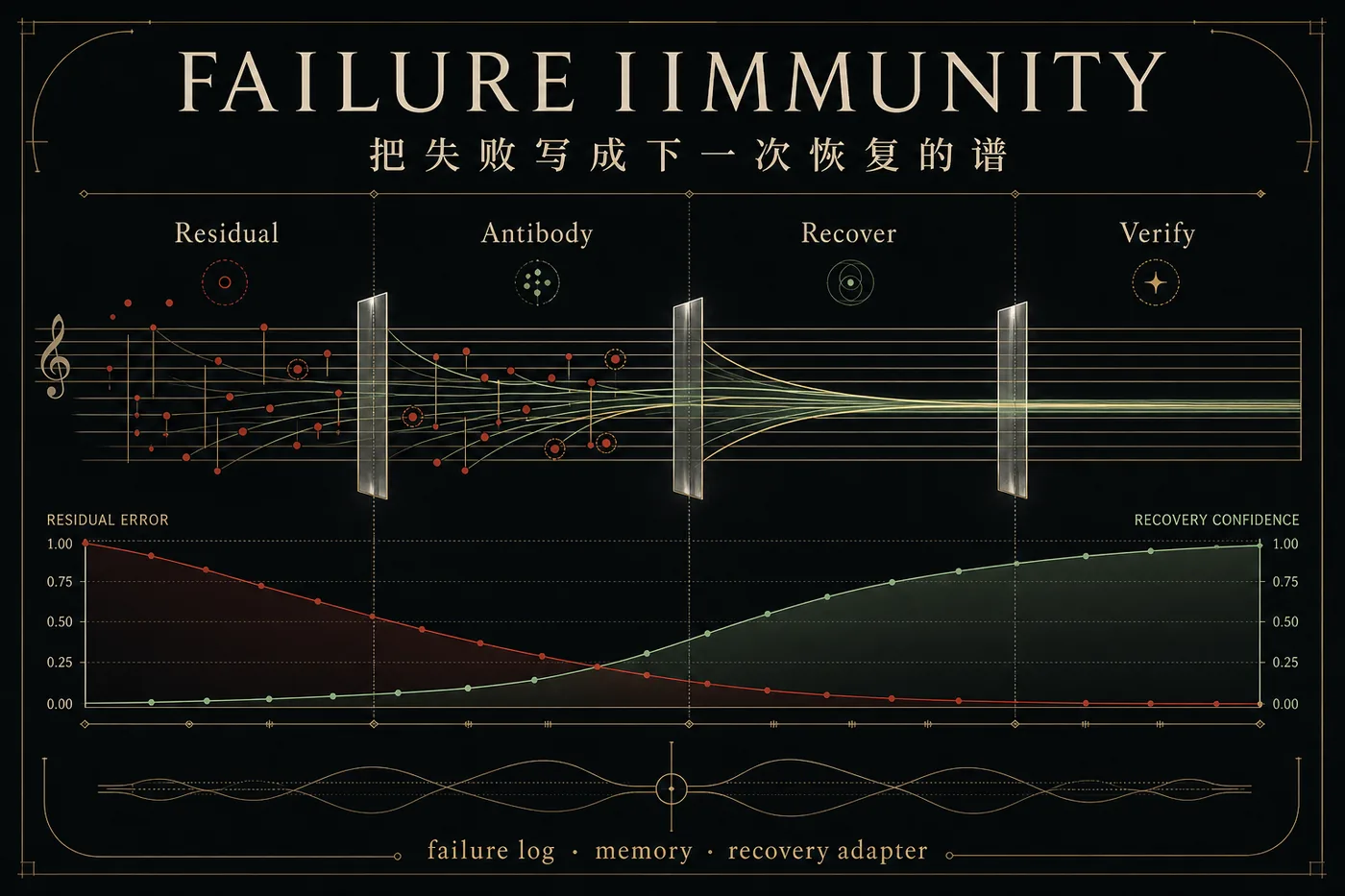
A system that only succeeds on the first attempt is capable. A system that detects residuals, enters an evidence gate, recovers safely, and remembers the failure is beginning to become reliable.

Residual scoring and recovery visual.

Core Pattern

From wrong answer to recoverable action.

Today's note focuses on failure recovery as a measurable layer of reliable AI. The core pattern is not a bigger first-shot prediction model; it is a closed loop that turns failure into structured evidence.

The loop has four parts: residual detection, evidence gates, bounded recovery, and reusable failure memory. This is the bridge between benchmark scores and systems that can operate under disturbance, ambiguity, and changing environments.
01

Residual Detection

The system must notice when the world no longer matches its prediction, plan, map, or semantic frame.

02

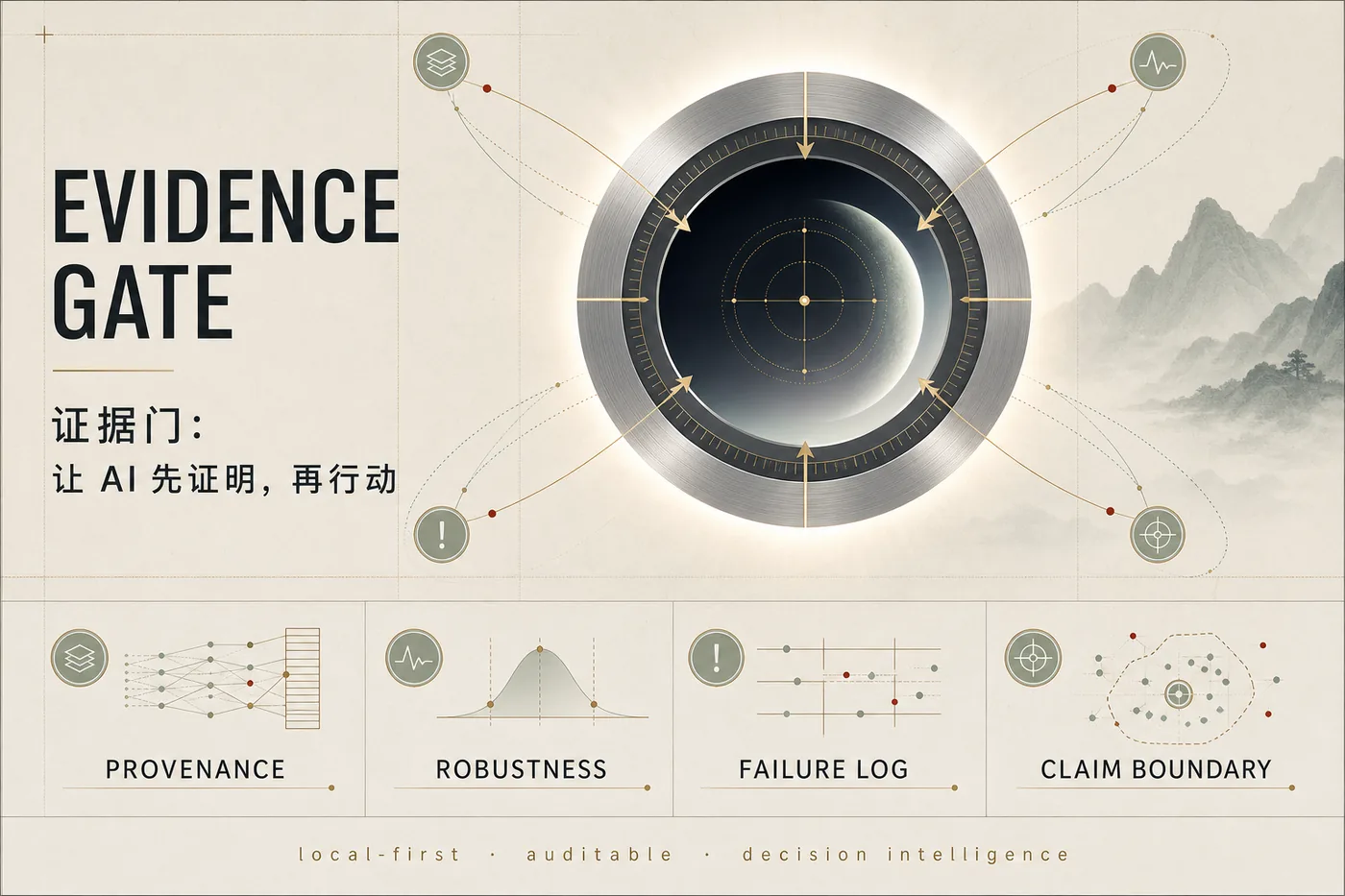
Evidence Gate

Recovery should pass through verifiable signals, not confidence alone: logs, constraints, feedback, and counterfactual checks.

03

Bounded Recovery

A reliable agent should recover within a safe envelope, lowering autonomy when uncertainty or risk rises.

04

Failure Memory

The failure must become reusable experience rather than a private accident hidden inside one trajectory.

Public Release

Canonical links for this note.

Evidence-gated learning visual.

Claim Discipline

This is a research and engineering note.

It should not be read as a detector SOTA claim, a complete real-robot deployment claim, or a universal proof of reliability. The point is narrower and more useful: reliability after failure can be specified, audited, and improved as a first-class system layer.

  • Do not collapse recovery into retry.
  • Do not treat confidence as evidence.
  • Do not hide failures outside the metric.
  • Do not call an agent reliable until it can recover under bounded uncertainty.