
Public Release - 2026-05-24

Make the public work inspectable without exposing non-public material.

A serious research program does not need to release everything at once. It needs a public rhythm: daily notes, reproducible slices, clean claim boundaries, and versioned artifacts that are ready for public citation.

Open-source boundary visual with public evidence gates and private product layers.

Release Rhythm

The public layer should be continuous, not theatrical.

The website is the public instrument panel. It can update every day: ideas, boundaries, evidence maps, paper status, public notes, and reproducible slices that do not depend on private systems.

GitHub and Hugging Face should move more slowly: each release should be small enough to run, clear enough to audit, and independent enough that reviewers can verify the public claim without needing hidden code.
01

Website First

The site is the daily public archive: claim boundaries, release notes, paper maps, and research direction.

02

Small Runnable Repos

Open-source modules should start as runnable slices: scorer, schema, toy demo, verifier, sample output.

03

Release Readiness

Materials become public when their citation target, evidence boundary, and version history are clear.

04

Decision-After Release

After accept, reject, withdraw, or permission, publish a public V2 package with clear version history.

05

Private Flywheel

Customer workflows, private receipts, production gates, financial traces, and deployment logic remain private.

06

Public Claim Rule

A public claim must be reproducible from public artifacts or be explicitly marked as a future/product-only claim.

Open Boundary

What opens now, what opens later, what stays private.

LayerOpen NowOpen LaterKeep Private
WebsiteDaily notes, paper map, evidence boundariesAccepted/revised paper updatesNone needed
GitHubSmall runnable protocol slicesPublic replication packages after public-boundary checksProduction orchestration
Hugging FaceDataset cards, sample rows, demo SpacesLarger public datasets with stable DOIsPrivate raw logs and paid API traces
Public record materialsPublic-ready records and summariesPublic revisions or V2Protected files and private communications
ProductAPI contracts and mock demosSelected SDKsCustomer data, execution gates, commercial flywheel
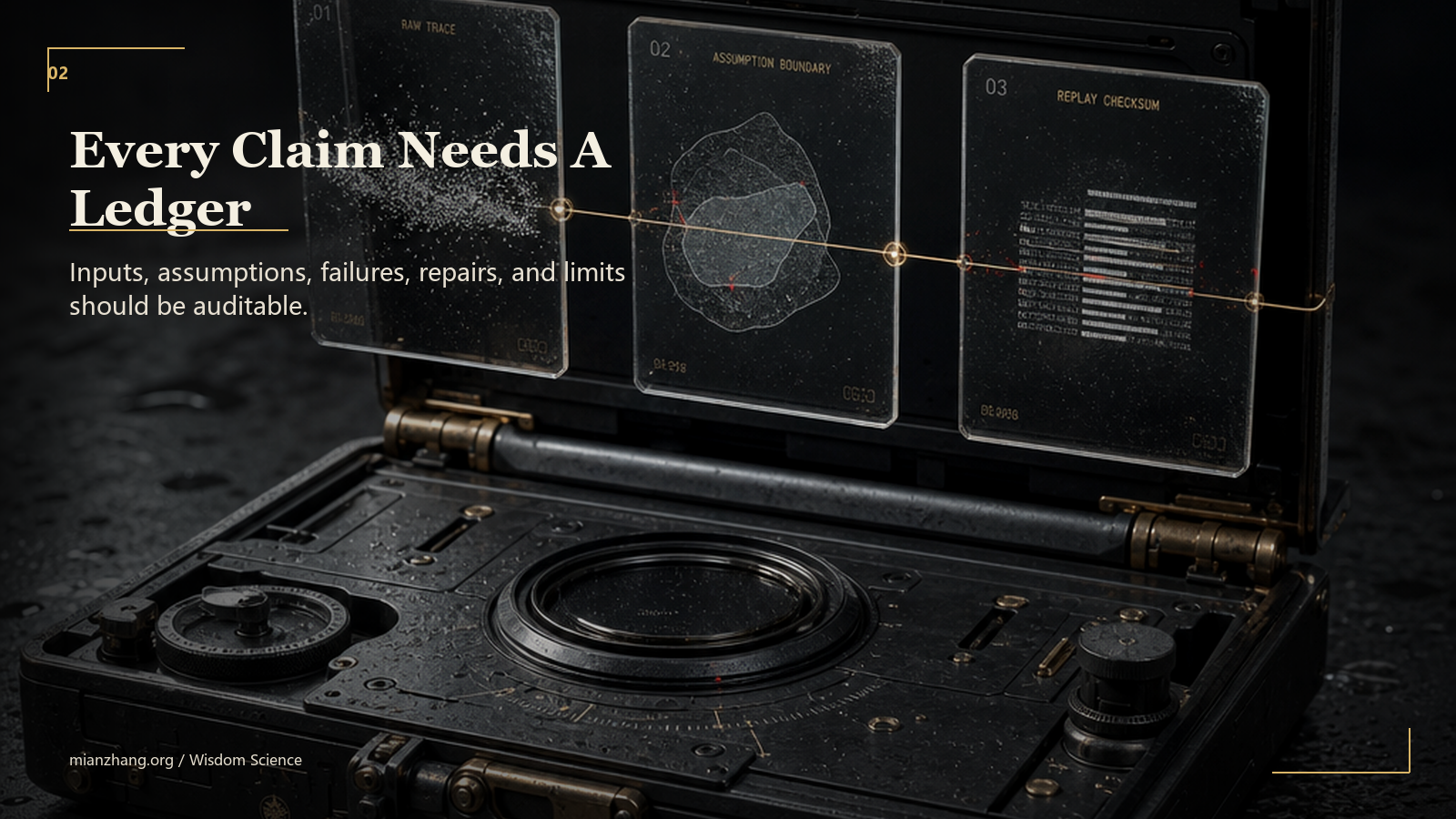
Evidence contract ledger visual.

Public Trust

Generosity is not the same as leakage.

A research program can be generous by releasing the right objects: protocols, schemas, toy systems, sample data, verification scripts, negative results, and claim boundaries.

It should not release private customer memory, real trading receipts, deployment gates, non-public materials, or anything that converts a safety protocol into an uncontrolled operational tool.