
Public Release - 2026-06-27

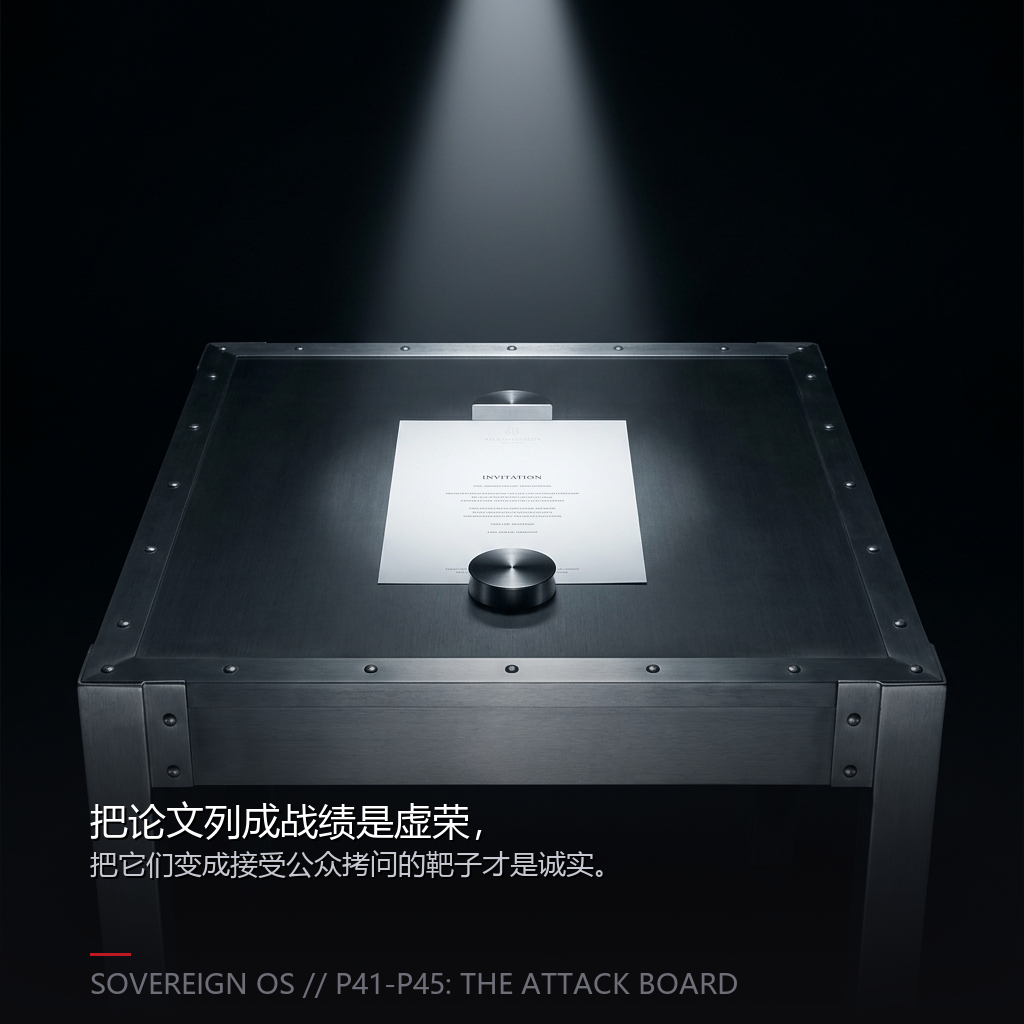
Paper count is not proof strength. A challenge board makes the claim surface visible.

Artifact: p41_p45_challenge_board_v1. This note maps P41-P45 style paper claims to review questions, evidence routes, boundary updates, and status fields.

paper_id supported_claim not_supported_claim challenge_question evidence_route boundary_update review_status
P41-P45 Challenge Board v1 public evidence visual.

Artifact

A challenge board separates volume from support.

The board does not ask readers to accept a paper cluster by weight. It turns each paper into a review row: what is supported, what is not supported, where the evidence is, and which question should be asked next.

The unsupported claim is the fastest way to find overreach.

Challenge

The unsupported claim is the fastest way to find overreach.

A paper can support a mechanism, a protocol, a measurement, or a formal claim without supporting every deployment sentence built around it. The challenge question exists to expose that gap before the claim becomes public shorthand.

Boundary updates are part of the board, not afterthoughts.

Review

Boundary updates are part of the board, not afterthoughts.

When a challenge narrows or changes a claim, the board should record the boundary update and the current review status. This keeps a public claim from looking stable after its support has moved.

1

paper_id

The paper or paper group being reviewed.

2

supported_claim

The claim currently supported by the available evidence route.

3

not_supported_claim

The adjacent claim that should not be inferred from the paper count.

4

challenge_question

The concrete question an external reviewer can use to test the claim.

5

evidence_route

The public artifact, registry, paper, or route that anchors the review.

6

review_status

The current status after challenge: open, narrowed, supported, revised, or retired.