Archive Status

Public records, evidence boundaries, and challenge routes.

This page separates citable public scientific records from materials that are outside the public site. Public preprints, Zenodo records, registries, demos, and site pages can be read, cited, and challenged. Non-public process materials and sensitive operating materials are not public artifacts.

External decisions matter, but they are not the only verification of a scientific claim.

public DOI claim limit public status safe challenge
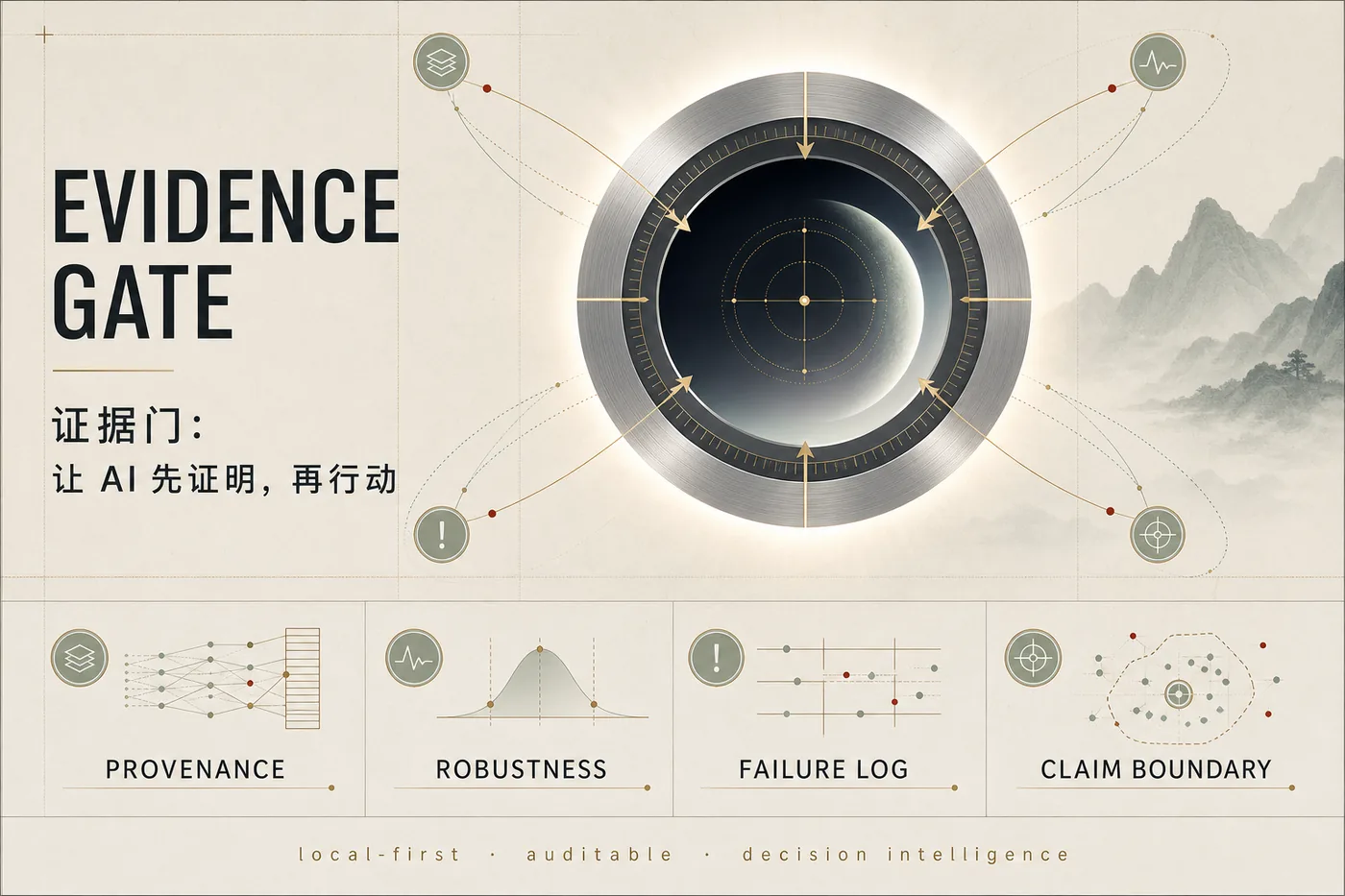
Black and gold evidence gate visual.
Public Preprints, DOI records, site pages
Outside Site Non-public venue and operating materials
Record Status Evidence signal, not final truth
Challenge Route Public target, public counterexample

Public / Non-Public

Use public artifacts for public discussion.

ClassStatusAllowed public useBoundary
Public preprintPublicRead, cite, quote briefly, critique, reproduce.Read only the public record and stated limitations.
Zenodo DOIPublicUse as the stable citation target for archived artifacts.Cite only the public record and version.
Site pagePublicUse for navigation, claim boundaries, demos, and evidence maps.Site text summarizes public context.
Process-specific materialOutside this siteUse the public DOI or public page for public discussion.Handle through the appropriate private or platform-specific channel.
Non-public fileOutside this siteDo not cite it as a public artifact.Wait for a public version or public DOI record.
Review communicationOutside this siteDo not use private correspondence as public evidence.Use public records for public claims.
Private linkOutside this siteDo not publish, request, mirror, or embed.Use the public DOI or public page instead.
Allowed

Public DOI citation

Cite the Zenodo record, DOI, version date, and public artifact title. Prefer DOI links over informal links.

Allowed

Public claim critique

Challenge exact public wording, formulas, datasets, reproduction commands, and evidence thresholds.

Not Allowed

Non-public material

Do not publish non-public venue links, private files, private communications, or protected system screenshots.

Not Allowed

Private-system requests

Do not ask for financial execution details, customer data, credentials, or private agent orchestration as public proof.

Record Status

External decisions are signals, not the whole epistemology.

An external decision is an important signal about fit, clarity, novelty, reviewer confidence, and community standards at a specific time. It is not, by itself, the only validation or invalidation of a scientific claim.

A rejected paper may still contain a correct narrow claim, useful dataset, valid formula, or reproducible negative result. An accepted paper may still need stronger baselines, cleaner boundaries, more replication, or later correction. Public verification should point to the claim, artifact, metric, limitation, and counterexample route, not only to an external label.

scientific status = public claim + public artifact + evidence boundary + counterexample pressure + revision history

How To Cite

Cite the public record, not a private process channel.

When a public DOI exists, use it as the stable citation target. If a site page summarizes the boundary, cite the page URL only for navigation or current project context.

NeedUseIncludeAvoid
Archive citationZenodo DOI recordAuthor, title, year, DOI, record URL, version if shown.Protected systems or non-public file URLs.
Claim contextPublic claim boundary pageExact page URL, section name, access date if required.Overstating a page as peer-review acceptance.
Evidence mapPublic evidence page or registryArtifact name, public link, version, metric, limitation.Requests for protected logs or hidden pipelines.
CounterexamplePublic issue or challenge routeTarget claim, public input, expected behavior, observed failure, repair proposal.Private data, credentials, private correspondence, or sensitive identity clues.

Claim Boundary

Read a claim by its evidence envelope.

Each public claim should be read through its named artifacts, methods, datasets, metrics, assumptions, limitations, and known failure modes. If the evidence supports a narrow protocol claim, do not inflate it into a deployment guarantee, finance claim, customer claim, or private-system disclosure obligation.

  • Find the exact public sentence or formula being claimed.
  • Trace it to a public DOI, page, dataset, registry, demo, or repository.
  • Check the stated limitation and whether the evidence actually reaches the wording.
  • Separate public-process status from claim status: an external outcome is one signal, not the sole scientific test.
  • Do not use public claims to infer private financial execution, customer records, credentials, or agent orchestration.

Submit Counterexamples

Make the objection public, bounded, and replayable.

Counterexamples are welcome when they target public claims with public evidence. A useful report does not need private access. It needs a fixed public target, a challenge class, a minimal replay path, and a bounded repair proposal.

  • Name the public target: DOI, page URL, repository issue, dataset version, formula, table, or section.
  • Choose a challenge class: formula counterexample, data leakage, stronger baseline, reproduction failure, or boundary overreach.
  • Provide the smallest public input, command, row id, toy case, or quote needed to replay the concern.
  • State expected behavior, observed failure, and the narrowest proposed correction.
  • Redact or omit any customer data, credentials, private operational traces, private correspondence, or non-public links.
counterexample = public target + challenge class + minimal replay + evidence gap + bounded repair

Boundary Statement

Public science should be citable and attackable; non-public material should stay outside public evidence.

Use public DOI records and public pages for public claims. Keep non-public venue materials, private communications, operational systems, customer data, credentials, and private orchestration out of public evidence.